
There is a particular kind of exhaustion that Dubai creates in people. It is not just physical tiredness — it is the accumulated weight of 50-hour work weeks, 40-degree summers that make outdoor recovery impossible, and the relentless pace of a city that never genuinely slows down. Most people manage it the way they always have: a spa visit when things get bad enough, a weekend away when the budget allows, or simply pushing through until the body forces a stop.
But something has been shifting quietly across the city’s residential communities over the past few years. The spa visit — once the default answer to physical and mental burnout — is losing ground to a far more practical alternative. More Dubai residents are choosing to bring professional wellness directly into their homes, and the reasons go well beyond simple convenience.
The Problem With the Traditional Spa Model in a City Like Dubai
To understand why this shift is happening, it helps to think honestly about what a spa visit actually involves in Dubai. You book an appointment, usually days in advance because same-day slots at reputable establishments are rarely available. You navigate traffic — often significant, depending on the time and location. You find parking, which in Jumeirah, Downtown, or DIFC means either a walk or a valet queue. You arrive, fill out a consultation form, change in a shared locker room, and wait in a relaxation area that may or may not feel relaxing depending on how many other guests are doing the same thing.
The session itself, if you have booked well, is excellent. But the 30 to 45 minutes on either side of it — the travel, the transitions, the changing, the drive home while still in that floaty post-massage state — eats into the recovery value significantly. You are spending roughly two and a half hours of your day to receive 60 or 90 minutes of treatment.
For someone with a genuinely demanding schedule, that arithmetic stops adding up. And Dubai, more than almost any other city, is full of people with genuinely demanding schedules.
What Actually Happens When the Therapist Comes to You
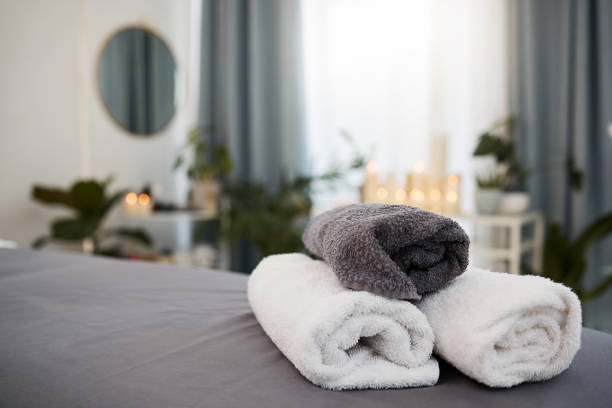
The in-home experience is structurally different in ways that matter. When you book home massage in Dubai with a properly established provider, a certified therapist arrives at your door with a professional-grade folding table, clean linen, and the oils or equipment relevant to the treatment you have chosen. Setup takes approximately five minutes. The session begins in your own space — your preferred lighting, your temperature, your silence or your music.
There is no transition anxiety. There is no awareness of other guests nearby. There is no drive home afterward in a state where you probably should not be driving. When the session ends, you are already where you need to be — your sofa, your bed, your bath. The parasympathetic state the therapist has spent an hour cultivating in your nervous system is not immediately disrupted by a car park.
This matters physiologically. The post-massage window — the 20 to 30 minutes immediately following a session — is when much of the hormonal benefit consolidates. Cortisol levels, which massage has been shown to reduce by up to 30 percent in clinical settings, continue to fall. Serotonin and dopamine, elevated during the session, remain high. Disrupting this window with stressful activity — traffic, navigation, social interaction — partially undoes the work.
Staying at home after a session is not laziness. It is better recovery.
The Quality Question Most People Get Wrong
The most common hesitation people express about in-home massage is a question of quality. The assumption runs something like this: a hotel spa or an established wellness centre has oversight, reputation, and accountability — a therapist who comes to your home does not.
This assumption made sense ten years ago. It is increasingly inaccurate now. The Dubai Health Authority has established clear licensing requirements for mobile massage therapists, and reputable in-home providers in the city operate with the same vetting standards as any established clinic — DHA certification checks, structured onboarding, session feedback systems, and liability coverage.
The better question is not whether in-home therapy can be high quality. It is how to identify the providers who consistently deliver it. The markers are straightforward: transparent therapist credentials available before booking, fixed pricing with no post-session upselling, clear cancellation policies, and a booking system that allows you to request the same therapist for continuity. Continuity, in fact, is one of the genuine advantages of a regular home arrangement — your therapist learns your body, your tension patterns, and your preferences over time in a way that a different spa therapist each visit cannot replicate.
Who Benefits Most — and Why the Answer Is Broader Than You Might Expect
The obvious candidates are professionals with compressed schedules — and yes, the time efficiency argument is compelling for them. But the residents who benefit most from regular in-home massage therapy are often not who you would first guess.
New parents in Dubai, managing infant schedules that make any planned outing feel like a logistical expedition, find in-home sessions one of the few forms of physical self-care that are actually achievable. People recovering from soft tissue injuries who need consistent treatment but cannot manage the energy of repeated clinic visits. Older residents who find the heat and the travel increasingly demanding. Individuals with anxiety for whom the social navigation of a spa environment is a genuine barrier to receiving care they need.
The spa visit is a wonderful thing for people whose lives accommodate it comfortably. For a significant portion of Dubai’s population, those conditions do not reliably exist — and in-home massage fills a gap that nothing else quite does.
Frequently Asked Questions
Is it safe to have a massage therapist come to your home in Dubai?
Yes, provided you book through a regulated provider. In Dubai, massage therapists are required to hold a Dubai Health Authority licence to practise legally. Reputable in-home providers verify this before putting a therapist on their books. Before your first session, you are entitled to ask for confirmation of your therapist’s credentials — any professional service will provide this without hesitation. Additionally, established providers maintain records of every session, therapist, and client, which creates an accountability layer equivalent to any clinic.
How does in-home massage compare in price to a spa in Dubai?
The price range is broadly comparable for equivalent quality. A 60-minute session with a skilled in-home therapist typically falls within the same range as a mid-to-upper-tier spa treatment in Dubai — roughly AED 250 to AED 450 depending on the modality and provider. When you factor in the time saved and the absence of any additional costs around the visit — parking, tips at reception, add-ons you feel obligated to take — the total cost of a spa visit often exceeds what appears on the treatment menu.
What should I prepare before a home massage therapist arrives?
Very little. A clear floor space of approximately 2 by 2.5 metres for the table, a room with a door for privacy, and ideally a slightly cooler temperature than the rest of your home since your body temperature will rise during the session. Most providers supply everything else — table, linen, oils, bolsters. You do not need to own any equipment or prepare anything beyond the space itself.
Can I request the same therapist for every session?
With most established in-home providers in Dubai, yes. Therapist continuity is one of the underappreciated advantages of a regular home arrangement. When a therapist sees you consistently, they develop a working knowledge of your posture, your chronic tension areas, and your pressure preferences that makes each subsequent session more targeted than the last. It is worth asking about this explicitly when you first book.